Construction companies operate in environments where operational success depends on accurate project planning, cost control, procurement coordination, and financial visibility.
This project-driven model is common not only in construction companies, but also in engineering firms and other project-based organizations.
Unlike manufacturing or product-based businesses, construction companies manage operations across multiple projects simultaneously. Each project involves complex coordination between engineering teams, procurement departments, subcontractors, site operations, and financial management.
Project costs, procurement activities, subcontractor agreements, and operational expenses must all be tracked accurately to ensure project profitability and financial control.
When these operational areas are managed through disconnected systems or spreadsheets, companies often experience delays in reporting, inaccurate project costing, and limited operational visibility.
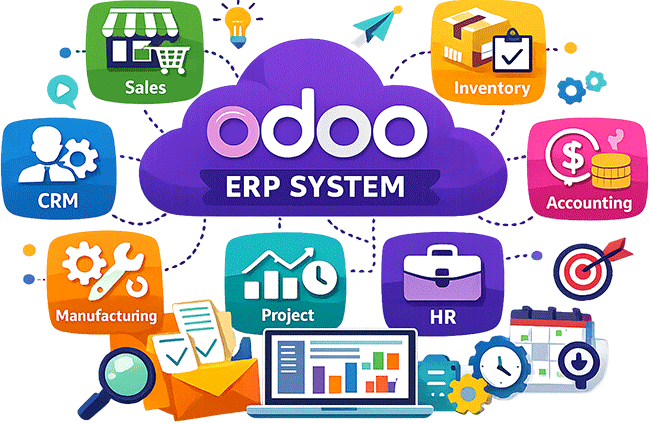
Construction ERP systems integrate project management, procurement, cost control, and financial reporting into a unified environment that supports project-based operations.
Construction companies operate within project-based environments where each project represents a separate operational and financial entity.
This operational model is also common across engineering firms, technical contractors, and other project-driven organizations.