ERP Systems for Organizations Across Multiple Industries

ERP systems across multiple industries

Organizations Beyond Core Industries

ERP systems are used across a wide range of industries to support financial management, operational coordination, and reporting.

While Archer Solutions focuses primarily on ERP implementations for real estate developers, construction companies, manufacturing operations, and facility management providers, ERP systems can also support organizations operating in many other sectors.

Companies in industries such as retail, trading, insurance, consulting, and non-profit organizations often face operational challenges similar to those found in other sectors. These include managing financial processes, coordinating operational activities, maintaining inventory or assets, and producing reliable management reports.

ERP systems help organizations integrate these operational activities into a unified environment that improves operational visibility and coordination across departments.

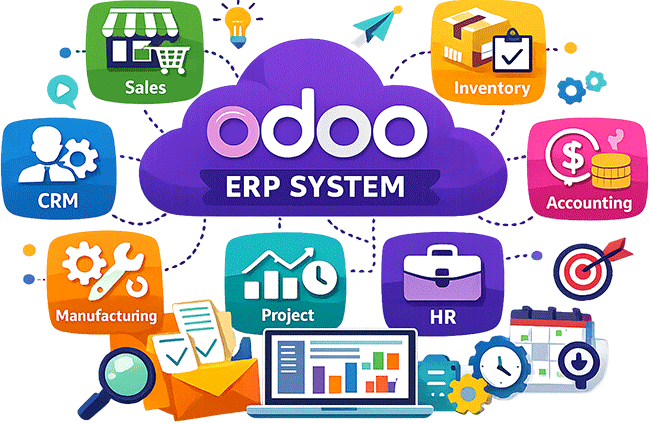
Operational Challenges Across Industries

Organizations across different sectors often encounter similar operational challenges as their operations expand.

Fragmented Operational Systems

Many companies rely on multiple independent systems for accounting, operations, customer management, and reporting.

This fragmentation can create duplicated data, inconsistent reporting, and limited operational visibility.

Limited Visibility into Financial and Operational Performance

When financial and operational data exist in separate systems, management teams often struggle to obtain a clear and reliable view of company performance.

Manual Coordination Between Departments

Organizations frequently rely on spreadsheets and manual coordination between departments to manage operational activities.

As the organization grows, these manual processes become increasingly difficult to maintain.

Difficulty Scaling Operations

Without integrated systems, expanding operations or increasing transaction volumes may lead to operational inefficiencies and reporting delays.

ERP systems help organizations address these challenges by integrating financial, operational, and reporting environments within a single platform.

ERP Capabilities Across Industries

ERP systems provide a flexible operational framework that can be adapted to support organizations in many sectors.

Although the operational workflows may differ between industries, several core capabilities remain common across most ERP implementations.

Financial Management and Accounting

ERP systems integrate financial transactions, invoicing, accounts receivable, accounts payable, and financial reporting within a unified accounting environment.

Procurement and Supplier Management

Organizations can manage procurement workflows, supplier relationships, purchase orders, and inventory or asset purchases through the ERP system.

Operational Coordination

ERP systems allow organizations to structure operational activities such as project coordination, service operations, or internal workflows.

Inventory and Asset Tracking

For organizations that manage physical goods or operational assets, ERP systems provide inventory control and asset tracking capabilities.

Reporting and Management Visibility

ERP systems integrate operational and financial data to provide management teams with structured reports and operational insights.

Archer Experience Across Multiple Industries

ERP implementations require understanding how operational workflows interact with financial structures and reporting requirements.

Archer Solutions implements ERP systems using the Odoo ERP platform to support organizations operating in environments where operational coordination and financial visibility are essential.

In addition to core industries such as real estate development, construction, manufacturing, and facility management, ERP systems have also been implemented for organizations operating in several other sectors.

These implementations typically focus on integrating financial operations, procurement processes, operational coordination, and reporting environments into a unified system.

By aligning ERP environments with operational workflows, organizations gain improved visibility into their operations and management performance.

Examples of Industries Supported

ERP systems can support organizations operating in a variety of sectors beyond the primary industries highlighted on this website.

Examples include:

retail companies managing product sales and inventory operations
trading and distribution companies coordinating procurement and logistics
consulting firms managing projects and financial reporting
insurance organizations coordinating operational processes and reporting
non-profit and NGO organizations managing funding, expenses, and operational activities
service companies providing operational or technical services

Although operational workflows differ between industries, ERP systems can be structured to reflect the operational environment of each organization.

Key Considerations for ERP Implementation in Different Industries

ERP implementation in organizations outside traditional vertical sectors requires careful operational analysis.

01

Understanding Operational Workflows

Each organization operates with unique operational processes that must be reflected in the ERP system.

02

Aligning System Structure with Business Operations

ERP systems must be configured to support the operational environment of the organization rather than forcing teams to adapt to generic system structures.

03

Integrating Financial and Operational Data

One of the primary objectives of ERP systems is to provide a unified view of financial and operational activities.

Successful implementations therefore require strong integration between operational workflows and financial reporting.

Frequently Asked Questions About ERP Across Industries

Can ERP systems be implemented in industries outside real estate or construction?

Yes. ERP systems are designed to support operational environments across many industries. The system structure can be configured to reflect the operational workflows of the organization regardless of the specific sector.

How adaptable are ERP systems to different industries?

Modern ERP platforms such as Odoo are highly configurable. Operational workflows, reporting structures, and system modules can be adjusted to match the requirements of different organizations.

Does ERP implementation differ across industries?

Yes. While many ERP capabilities are common across industries, the way systems are configured and implemented varies depending on operational workflows, reporting needs, and organizational structure.

Discuss Your ERP Project

If your organization operates in an industry not listed among the primary sectors on this website and is evaluating ERP systems, our team can help assess your operational environment and implementation requirements.