
Operational Alignment
The ERP system must reflect real operational workflows rather than forcing organizations to adapt to generic software structures.
Implementing an ERP system is not simply a technical deployment.
It is a structured process that aligns the system with how an organization operates.
Successful ERP projects require coordination between business teams, operational workflows, and system configuration to ensure that the system reflects real business processes.
Archer Solutions follows a structured implementation approach designed to reduce project risk and ensure that ERP environments support operational needs across finance, operations, and management.
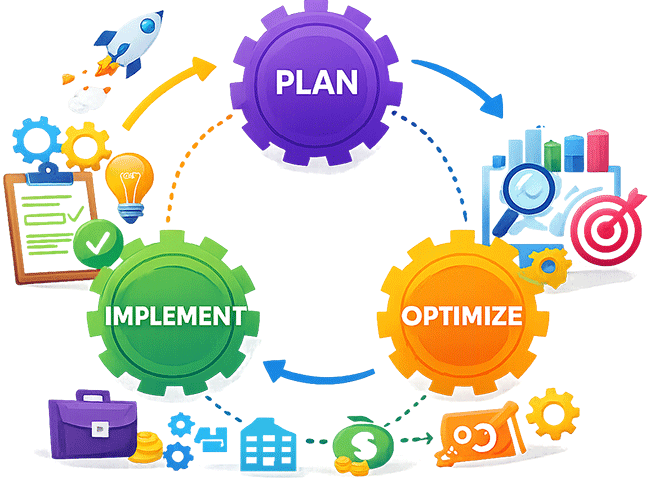
ERP implementation is guided by several core principles.
The ERP system must reflect real operational workflows rather than forcing organizations to adapt to generic software structures.
Projects follow defined phases that ensure proper analysis, system configuration, testing, and validation before deployment.
Custom development is introduced only when necessary to support operational requirements that cannot be addressed through configuration.
ERP systems must be adopted by operational teams. Training and validation phases ensure that users can operate the system effectively.
ERP projects follow a sequence of structured phases designed to gradually align the system with operational requirements.
Phase 1
The project begins with understanding how the organization operates.
This phase typically includes:
The outcome of this phase is a clear understanding of how the ERP system should support operational activities.
Phase 2
Once operational workflows are understood, the ERP environment is configured to support these processes.
This phase may include:
The goal is to design an ERP environment aligned with operational needs.
Phase 3
Operational data must be structured and prepared before it is introduced into the ERP system.
This may include:
Proper data preparation ensures the system starts with reliable information.
Phase 4
Before the system is deployed, operational teams validate that the ERP environment supports real workflows.
This phase includes:
Testing ensures the system performs as expected in real operational scenarios.
Phase 5
After validation, the ERP system becomes the operational environment for the organization.
This phase typically includes:
The objective is to ensure a smooth transition from previous systems to the ERP environment.

ERP systems continue to evolve after deployment.
During the initial operational period, the implementation team supports organizations in:
This stabilization period ensures the ERP system becomes a reliable operational platform.
ERP environments differ significantly depending on the industry.
Archer Solutions focuses on implementing ERP systems for organizations operating in industries such as:
Explore ERP solutions by industry:
ERP environments structured around reservations, installment plans, project delivery coordination, and customer lifecycle management.
Learn moreERP systems aligned with project costing, procurement coordination, subcontractor management, and financial reporting across projects.
Learn moreERP systems supporting maintenance planning, service operations, asset visibility, and operational reporting for facility operators.
Learn moreERP environments supporting production planning, inventory control, procurement, and operational reporting across manufacturing operations.
Learn moreERP implementations for organizations operating outside the core industries while still requiring structured operational systems.
Learn moreEach implementation is structured around the operational requirements of the industry involved.
If your organization is evaluating ERP systems or planning an implementation project, Archer Solutions can help assess operational requirements and implementation scope.