
Financial Management
Accounting, financial reporting, invoicing, and financial control across business operations.
Enterprise Resource Planning systems help organizations integrate operational activities into a single environment. Instead of relying on separate tools for finance, sales, procurement, and operations, ERP systems allow organizations to manage these functions through a unified platform.
Odoo is an ERP platform designed to integrate multiple business functions within a single system. Organizations use Odoo to connect financial management, operational workflows, procurement processes, customer management, and reporting environments.
Because the platform is modular and flexible, Odoo can be adapted to support a wide range of industries and operational structures.
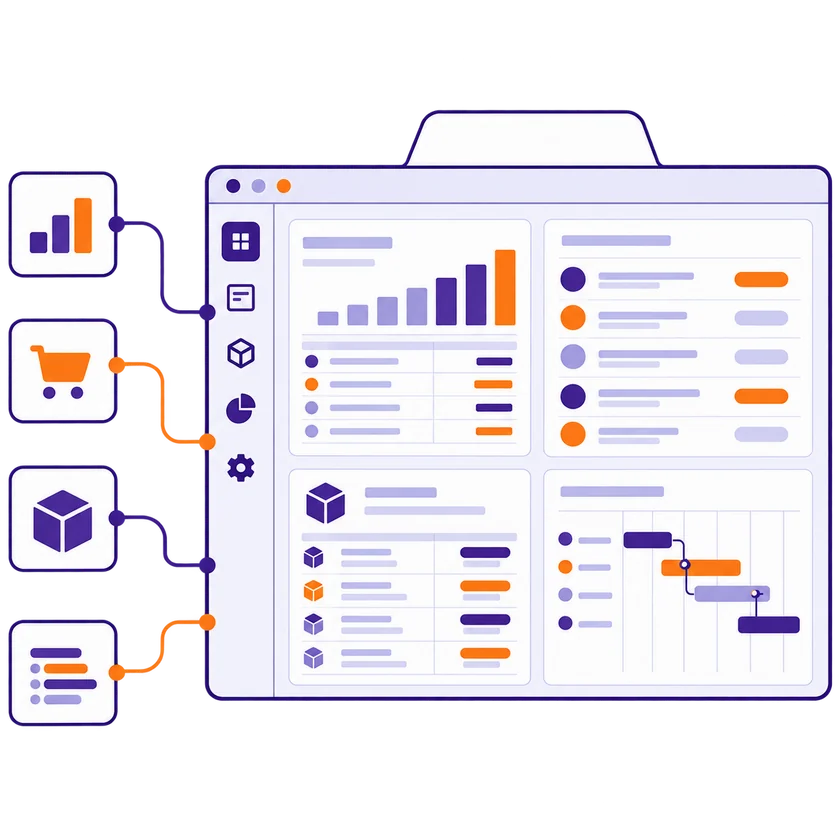
Odoo is a business management platform that integrates different operational functions within a unified system.
Organizations often operate with separate tools for accounting, customer management, project coordination, inventory management, and human resources. These tools may operate independently, which can lead to fragmented data and limited visibility across the organization.
ERP systems address this challenge by consolidating operational activities within a single environment.
Odoo enables organizations to manage multiple business domains through a unified platform while maintaining flexibility to adapt the system to operational requirements.
The Odoo platform supports multiple operational areas within an organization.
Accounting, financial reporting, invoicing, and financial control across business operations.
Customer lifecycle management, sales processes, contract management, and customer interaction tracking.
Supplier management, procurement workflows, inventory tracking, and supply chain coordination.
Project planning, operational coordination, and visibility across ongoing operational activities.
Employee management, attendance tracking, time-off management, and payroll operations.
Integrated reporting environments that provide visibility into financial and operational performance.
These operational areas allow organizations to consolidate key activities within a unified business system.
Organizations adopt ERP platforms when operational complexity increases and existing tools no longer provide sufficient coordination or visibility.
Typical reasons organizations adopt ERP systems include:
Odoo provides a flexible platform capable of supporting these operational requirements while allowing organizations to structure the system around their workflows.
Although ERP platforms provide a technical foundation, the effectiveness of an ERP system depends on how it is implemented within the operational environment of the organization.
Archer Solutions focuses on implementing ERP systems for organizations operating in industries where operational coordination is essential.
These industries include:
ERP environments supporting reservations, installment structures, project delivery coordination, and customer lifecycle management.
Learn moreERP systems integrating project costing, procurement coordination, subcontractor management, and financial reporting across multiple projects.
Learn moreERP systems supporting maintenance planning, service operations, asset management, and operational reporting for facility operators.
Learn moreERP environments supporting production planning, inventory management, procurement processes, and operational reporting.
Learn moreERP implementations for organizations operating outside the core industries covered above.
Learn moreAn ERP platform alone does not automatically produce operational efficiency.
The effectiveness of an ERP environment depends on how the system is configured and aligned with operational processes.
ERP implementations therefore involve:
Learn more about our implementation methodology:
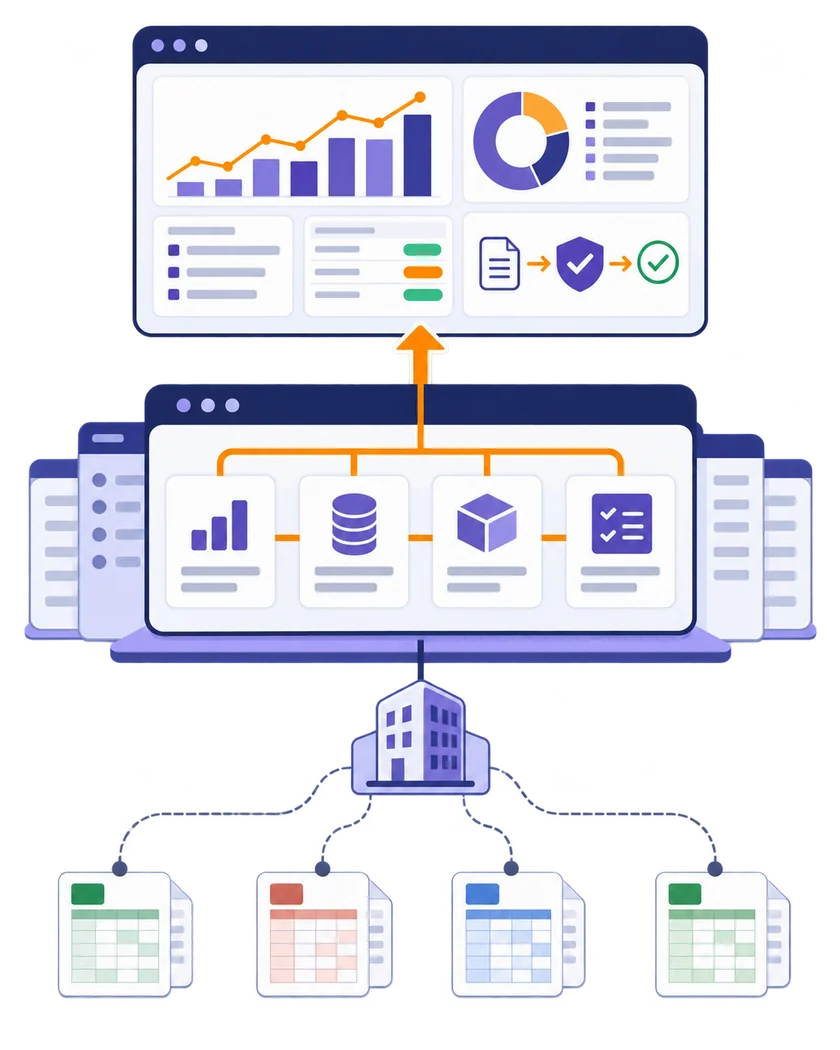
Odoo’s modular structure allows the starting applications to reflect the workflows your organization needs to connect today. Analysis identifies the dependencies, data and controls required for that scope.
Additional applications, projects or companies can be considered as requirements develop. Expansion is planned and assessed—not assumed to be automatic—and may involve further configuration, integration, development, data preparation or training.
The value of an ERP platform is demonstrated by the operational relationships it preserves across companies, teams, and countries.
A five-company Odoo environment connecting real estate sales, contracts, finance, customer experience, and shared operations across eight projects.
View the Modon caseA configurable Odoo platform supporting 175 users across eight countries while preserving local operating rules inside a common model.
View the Reach caseIf your organization is evaluating ERP systems or exploring how Odoo can support operational integration, Archer Solutions can help assess your operational requirements and implementation scope.
Optional measurement cookies let Google Analytics and Google Ads measure visits and connect enquiries, qualification and sales outcomes to ads. This choice does not share your phone or email or enable personalized ads. Forms work when you reject measurement.
With optional measurement and your additional permission, OpenAI may connect confirmed enquiries and later CRM qualification and sales outcomes to ChatGPT ads. We do not send your name, company, phone, email or project note. Forms work when you decline.
Existing optional measurement permission is also required. This choice does not change your Google preferences.
OpenAI measurement is off.OpenAI measurement is allowed.