Construction ERP for Contractors and Engineering Companies

ERP systems across multiple industries

Construction and Project-Based Operations

Construction companies operate in environments where operational success depends on accurate project planning, cost control, procurement coordination, and financial visibility.

This project-driven model is common not only in construction companies, but also in engineering firms and other project-based organizations.

Unlike manufacturing or product-based businesses, construction companies manage operations across multiple projects simultaneously. Each project involves complex coordination between engineering teams, procurement departments, subcontractors, site operations, and financial management.

Project costs, procurement activities, subcontractor agreements, and operational expenses must all be tracked accurately to ensure project profitability and financial control.

When these operational areas are managed through disconnected systems or spreadsheets, companies often experience delays in reporting, inaccurate project costing, and limited operational visibility.

Construction ERP systems integrate project management, procurement, cost control, and financial reporting into a unified environment that supports project-based operations.

Construction companies operate within project-based environments where each project represents a separate operational and financial entity.

This operational model is also common across engineering firms, technical contractors, and other project-driven organizations.

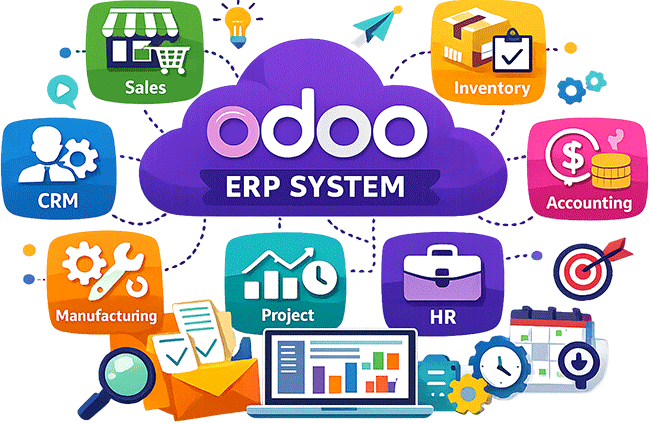
Operational Challenges for Construction Companies

As construction companies expand their project portfolios, operational complexity increases across project management, procurement, and financial control.

Many contracting companies encounter similar challenges as the number of projects and subcontractors grows.

Project Cost Control

Construction companies must track project costs across multiple categories including materials, labor, subcontractors, equipment, and operational expenses.

Without integrated systems, tracking real project costs becomes difficult and project profitability may become unclear until late stages of execution.

Construction companies rely heavily on accurate project cost control to maintain profitability.

Materials, subcontractors, labor, and equipment costs must all be tracked against project budgets.

ERP systems enable structured project cost control by linking procurement, project activities, and financial reporting within a single operational environment.

Procurement Coordination

Construction projects rely heavily on procurement processes for materials, equipment, and subcontractor services.

When procurement operates independently from project management and cost tracking, delays and budget overruns become more likely.

Subcontractor Management

Many construction companies rely on subcontractors to execute portions of project work.

Managing subcontractor contracts, progress billing, and payments requires careful coordination with project progress and financial systems.

Multi-Project Visibility

Construction companies often run several projects simultaneously across different locations.

Management teams need operational visibility into project progress, cost performance, procurement status, and financial exposure across the entire project portfolio.

Financial and Contractual Complexity

Construction contracts often involve progress billing, variation orders, and milestone-based payments.

Managing these financial structures requires systems capable of integrating project execution with accounting and financial reporting.

Evaluating ERP for Your Construction Operations?

If your company is exploring ERP solutions to improve project cost control, procurement coordination, and operational visibility, Archer Solutions can help assess your operational requirements and implementation scope.

What an ERP System Must Support in Construction Companies

ERP systems designed for construction environments must integrate project management, procurement, cost tracking, and financial operations within a unified operational platform.

Rather than operating as separate tools, these systems must provide a consolidated environment for managing project-based businesses.

Project Cost Management

Construction ERP systems must track project costs across multiple cost categories including materials, subcontractors, labor, and equipment.

This allows companies to monitor project profitability while maintaining financial control.

Procurement and Material Management

Construction projects require continuous procurement of materials and equipment.

ERP systems integrate procurement processes with project budgets and inventory tracking to ensure that materials are available when required.

Subcontractor and Vendor Management

Contractors must manage multiple subcontractors across different projects.

ERP systems support subcontractor agreements, procurement processes, and financial settlements linked to project activities.

Project Financial Integration

Construction ERP systems integrate project operations with accounting and financial reporting.

This integration allows management teams to monitor project profitability, track project cash flow, and maintain accurate financial reporting.

Archer Experience in Construction ERP Implementations

ERP implementation in construction companies requires an understanding of how project-based operations function across procurement, engineering, and financial management.

Construction environments involve complex coordination between project managers, procurement teams, subcontractors, and financial departments.

Archer Solutions supports construction and engineering companies in implementing ERP environments that integrate project costing, procurement workflows, subcontractor coordination, and financial reporting.

Using the Odoo ERP platform, Archer helps contracting companies move from fragmented project management tools and spreadsheets into unified systems that provide operational visibility across their project portfolios.

These implementations are designed to support both growing contracting firms and established engineering companies managing multiple projects simultaneously.

Planning an ERP Implementation for Your Construction Company?

Our team can help evaluate your project operations and design an ERP implementation aligned with your project workflows.

Typical ERP Scope for Construction Companies

ERP implementations in construction companies typically extend across several operational domains.

While the exact scope depends on the size of the company and the complexity of projects being managed, most implementations include the following functional areas.

Project Management and Cost Tracking

ERP systems support project structures where costs are tracked against project budgets and operational activities.

Procurement and Vendor Management

Procurement processes are linked to project budgets and operational requirements, ensuring accurate cost tracking and procurement control.

Subcontractor Management

Construction ERP systems support subcontractor agreements, work tracking, and payment management.

Financial and Accounting Integration

Project costs, procurement activities, and subcontractor payments are fully integrated with financial reporting systems.

Reporting and Project Performance Monitoring

ERP systems provide operational dashboards and financial reports that allow management teams to monitor project performance and financial exposure.

Key Considerations for Successful Construction ERP Implementation

ERP implementation in construction environments requires careful planning and coordination across operational and financial teams.

Several factors play an important role in ensuring successful ERP adoption.

01

Project Structure Definition

Before implementing ERP systems, companies must define how projects are structured within the system, including cost centers, project phases, and financial tracking.

02

Procurement and Cost Control Integration

Procurement processes must be aligned with project budgets to ensure accurate cost tracking and financial control.

03

Cross-Department Coordination

Construction ERP systems involve coordination between project managers, procurement teams, financial departments, and executive management.

04

Structured Implementation Governance

ERP projects must follow structured implementation phases including operational analysis, system configuration, testing, and controlled go-live.

Case Studies

Archer Solutions has supported construction and engineering companies in implementing ERP systems that integrate project management, procurement coordination, and financial reporting.

Examples include implementations for construction contractors and engineering companies operating across multiple projects.

Some of these implementations include:

Frequently Asked Questions About Construction ERP

What ERP system is suitable for construction companies?

Construction companies require ERP systems capable of managing project costing, procurement workflows, subcontractor coordination, and financial reporting.

Platforms such as Odoo provide integrated environments suitable for project-based operations.

Can ERP systems track project costs in construction companies?

Yes. Construction ERP systems track project costs across materials, subcontractors, labor, and operational expenses.

This allows management teams to monitor project profitability and financial exposure.

How long does ERP implementation take for construction companies?

ERP implementation timelines depend on project complexity and operational scope.

For many contracting companies, ERP implementation typically ranges between 3 to 6 months.

Discuss Your ERP Project

If your company is evaluating ERP solutions for construction operations, Archer Solutions can help assess your operational requirements and implementation scope.