Real Estate ERP for Developers

ERP systems across multiple industries

Real Estate Development Operations

Real estate development is one of the most operationally complex industries.

Developers must coordinate multiple operational domains simultaneously, including sales reservations, installment-based payment structures, construction execution, and final unit delivery.

Unlike many industries where transactions are completed immediately, real estate projects operate over long cycles that may extend for several years. During this time, companies must manage thousands of reservations, payment schedules, construction milestones, and customer communications.

These operations require continuous coordination between sales teams, finance departments, project management, and customer service units. When these functions operate through disconnected systems or spreadsheets, operational visibility becomes limited and financial control becomes increasingly difficult.

As projects scale and portfolios grow, many developers reach a point where manual tracking and fragmented tools can no longer support the complexity of their operations. At this stage, the need for an integrated ERP system becomes critical.

Operational Challenges for Real Estate Developers

Real estate developers in typically face several operational challenges as their projects expand.

Managing Multiple Projects Simultaneously

Real estate developers often operate multiple projects simultaneously, each with its own budgets, contractors, and sales performance. Maintaining visibility across the entire portfolio becomes difficult without integrated systems.

Fragmented Reservation and Sales Management

Sales teams often manage reservations through CRM tools or spreadsheets, while finance teams track payments separately.

This fragmentation makes it difficult to maintain a single, reliable view of unit availability, customer contracts, and installment status.

Complex Installment Structures

Payment plans in real estate projects can span several years and may include down payments, quarterly installments, annual payments, and construction-linked milestones.

Managing these structures manually increases the risk of errors, delays in collections, and reporting inconsistencies.

Limited Visibility into Construction Progress

Construction execution is usually tracked in separate project management tools or internal reports.

Without integration with the sales and financial systems, management teams often struggle to align project progress with contractual delivery commitments.

Customer Delivery and Post-Sales Operations

Unit delivery involves multiple operational steps including final payments, inspections, documentation, and customer service follow-up.

Without integrated systems, these processes often rely on manual coordination between departments.

Data Fragmentation Across Departments

Perhaps the most common challenge is the lack of a unified operational system.

Sales, finance, construction, and customer service frequently operate on different tools, creating duplicated data, inconsistent reporting, and limited operational insight.

Facing Similar Operational Challenges?

If your company is evaluating ERP solutions for real estate development operations, our team can help assess your requirements and implementation scope.

Why Generic ERP Implementations Often Fail in Real Estate Companies

Many ERP projects in real estate companies fail not because the software is incapable, but because the implementation does not properly reflect the operational structure of the industry.

Generic ERP systems are typically designed around simple sales transactions and standard financial processes.

However, real estate development involves long-term contractual relationships, complex installment structures, and close coordination between commercial and construction activities.

When ERP implementations treat real estate operations as standard sales transactions, several issues quickly emerge.

Contract and Reservation Complexity

Real estate sales are not simple invoices.

They involve reservations, contracts, installment schedules, cancellations, transfers, and unit availability tracking. Systems that are not designed to manage these relationships often require manual workarounds.

Payment Plan Structures

Developers frequently use flexible installment plans that vary between projects and customers.

Generic systems struggle to manage dynamic payment structures, which leads to reliance on spreadsheets outside the ERP environment.

Construction and Delivery Coordination

A real estate project links sales commitments with construction progress and delivery timelines.

When these operational areas are managed in separate systems, management teams lose the ability to see the full operational picture.

Data Fragmentation

Without an ERP system designed around the real estate lifecycle, departments often maintain parallel datasets.

Sales, finance, and project management teams may each track their own information, leading to inconsistencies and reporting delays.

For this reason, successful ERP implementations in real estate companies require an operational design that reflects the full lifecycle of a development project.

What an ERP System Must Support in Real Estate Development

A properly designed ERP system for real estate developers must integrate the full operational lifecycle of a project, from unit reservation to final delivery and post-sales operations.

Instead of treating each department as a separate system, the ERP must act as a unified operational platform.

Reservation and Unit Management

The system must maintain a real-time view of project units, including availability, reservation status, and contractual ownership.

Sales teams should be able to track reservations and generate contracts while maintaining full visibility into project inventory.

Contract and Installment Management

ERP systems must support structured installment schedules that may span several years.

This includes automated payment tracking, installment reminders, and financial reporting aligned with contract structures.

Financial Integration

Installments, collections, and project-related revenues must be fully integrated with the accounting system.

This ensures accurate financial reporting and real-time visibility into project cash flow.

Construction and Project Visibility

Although construction execution may involve specialized project management tools, ERP systems should maintain operational visibility into project progress and delivery timelines.

Customer Delivery and Post-Sales Operations

Unit delivery involves several operational steps including final settlements, documentation, and customer service coordination.

ERP systems must support these workflows to ensure a smooth transition from construction completion to customer handover.

When these operational areas are integrated into a single system, management teams gain the visibility and control required to manage complex development portfolios.

Evaluating ERP for Your Real Estate Operations?

ERP implementation requires careful planning and operational analysis.
Our team works with real estate developers to design ERP environments aligned with real project workflows.

Archer Experience in Real Estate ERP Implementations

ERP implementation in the real estate industry requires more than software configuration.

It requires a deep understanding of how development companies operate across the full lifecycle of their projects.

Archer Solutions has worked extensively with real estate developers, implementing ERP systems that integrate commercial operations, financial management, and project execution. Archer Solutions has implemented ERP systems for more than 20 real estate companies, supporting organizations with diverse project portfolios and operational structures.

ERP implementations are built on the Odoo ERP platform, extended and configured to support real estate development operations including reservations, installment management, project visibility, and financial integration.

These implementations typically address the operational complexity created by long payment cycles, multi-project portfolios, and the need for continuous coordination between departments.

Through these projects, Archer has developed implementation practices tailored specifically to real estate development environments. These practices focus on aligning system design with real operational workflows rather than forcing companies to adapt to generic software structures.

The result is an ERP environment that provides management teams with operational visibility, financial control, and improved coordination between departments.

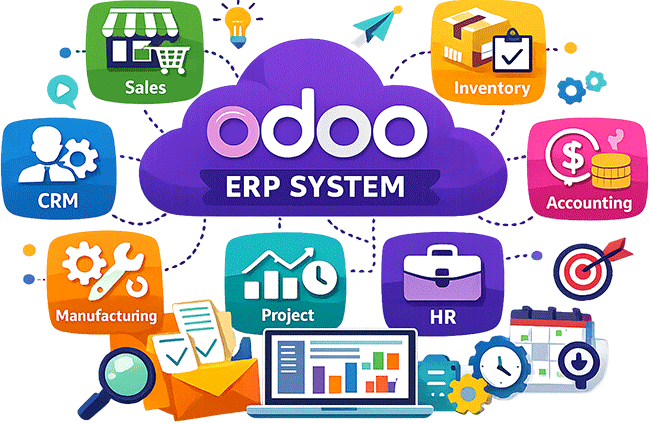
Typical ERP Scope for Real Estate Developers

ERP implementations in real estate companies usually extend across several operational domains.

While the exact scope varies depending on the company’s size and project portfolio, most implementations include the following functional areas.

Sales and Reservation Management

The ERP system manages project units, reservations, and customer contracts.

Sales teams can track unit availability in real time while maintaining accurate records of reservations and contractual agreements.

Installment and Payment Management

Installment schedules are integrated directly into the system, allowing companies to track payment plans, collections, and outstanding balances across multiple projects and customers.

Financial and Accounting Integration

All financial transactions related to reservations, installments, and project revenues are integrated with the accounting system.

This ensures accurate financial reporting and real-time visibility into cash flow.

Project and Construction Visibility

ERP systems support operational visibility into project progress and delivery timelines.

This allows management teams to align commercial commitments with construction execution.

Customer Delivery and After-Sales Operations

Delivery processes typically involve inspections, documentation, final settlements, and customer service coordination.

ERP systems can support these workflows to ensure a smooth transition from construction completion to customer handover.

Key Considerations for Successful ERP Implementation

The success of an ERP project in a real estate company depends not only on the software selected but also on how the implementation process is structured.

Several factors are particularly important in development environments.

01

Proper Operational Analysis

Before configuring the system, it is critical to understand how the company manages reservations, installment plans, project tracking, and delivery processes.

A clear operational analysis ensures that the ERP system reflects the company’s real workflows.

02

Controlled Customization

Real estate companies often require certain custom features to manage contracts, payment plans, or reporting structures.

However, customization must be carefully controlled to maintain system stability and future upgrade compatibility.

03

Cross-Department Alignment

ERP implementation requires coordination between sales, finance, project management, and customer service teams.

Ensuring that these departments participate in the design process helps create a system that supports the entire organization.

04

Structured Implementation Governance

Successful ERP projects follow a structured implementation process that includes analysis, system configuration, testing, and controlled go-live phases.

This structured approach reduces implementation risks and improves long-term system adoption.

Case Studies

Archer Solutions has implemented ERP systems for multiple real estate developers, supporting operations across sales management, installment tracking, project coordination, and financial reporting.

Some of these implementations include:

Frequently Asked Questions About Real Estate ERP

What ERP system is suitable for real estate developers?

ERP systems used in real estate development must support operational processes such as unit reservations, customer contracts, installment payment plans, and project delivery coordination.

The most suitable ERP platforms for real estate developers are those that can integrate commercial operations, financial management, and project visibility within a single system. The success of the project, however, depends largely on how the system is implemented and adapted to the operational structure of the development company.

How long does ERP implementation take for a real estate company?

The duration of ERP implementation depends on the size of the company, the number of projects being managed, and the scope of system integration required.

For many development companies, implementation typically ranges between 3 to 6 months, depending on the complexity of sales operations, installment structures, and internal processes.

A structured implementation approach that includes operational analysis, system configuration, testing, and phased go-live significantly improves the chances of a successful deployment.

Can ERP systems manage installment payment plans for real estate projects?

Yes. ERP systems designed for real estate operations can manage complex installment payment structures that extend over multiple years.

These systems can track down payments, scheduled installments, overdue balances, and customer payment history while maintaining full integration with the accounting system. This provides management teams with accurate financial visibility across all projects and customers.

Does ERP integrate sales, finance, and construction operations?

A properly designed ERP environment integrates the key operational domains of a real estate developer.

Sales teams manage reservations and contracts, finance departments track installments and financial reporting, and management teams gain visibility into project progress and delivery timelines.

When these operations operate within a unified system, companies gain better operational control and reduce the risks associated with fragmented data.

What is the main reason ERP projects fail in real estate companies?

Many ERP projects fail when systems are implemented as generic accounting or sales platforms without reflecting the operational structure of real estate development.

Successful implementations require system designs that reflect the full project lifecycle, including reservations, contract management, installment plans, construction coordination, and delivery operations.

Proper analysis and structured implementation governance are therefore essential for long-term success.

Discuss Your ERP Project

If your company is evaluating ERP systems for real estate development operations, Archer Solutions can help assess your operational requirements and implementation scope.