Manufacturing companies operate in an environment where operational efficiency, production planning, and supply chain coordination are critical to maintaining competitiveness.
Factories must manage multiple operational domains simultaneously, including production planning, raw material procurement, inventory control, quality management, and financial reporting. These operational areas are closely interconnected, and disruptions in one area can quickly impact the entire production process.
Small and medium manufacturing companies often begin with a combination of accounting software, spreadsheets, and manual operational processes. While these tools may support early-stage operations, they become increasingly difficult to manage as production volumes increase and supply chains become more complex.
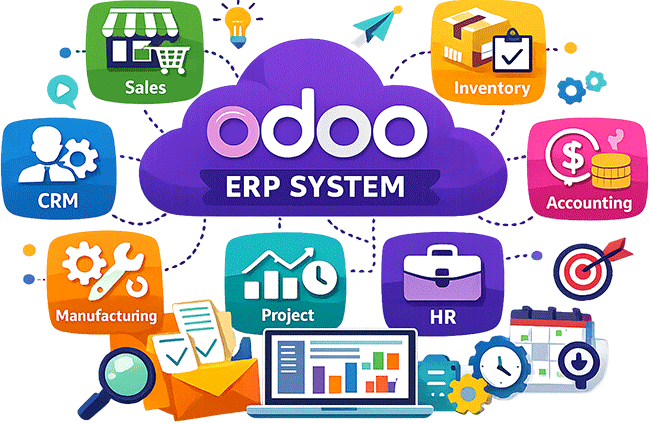
Manufacturing ERP systems help integrate factory operations into a single environment where production planning, inventory management, procurement, and financial operations are connected through a unified platform.
When properly implemented, an ERP system provides factory management with real-time visibility into production operations, material consumption, inventory levels, and operational costs.
Manufacturing companies operate through tightly connected processes that link production planning, material availability, machine utilization, and financial control.
When these operations are managed through disconnected tools or spreadsheets, production visibility becomes limited, operational delays increase, and management decisions become more difficult.
Modern ERP systems allow manufacturing companies to integrate these operational processes into a single environment that provides real-time visibility into production activities, inventory levels, procurement requirements, and operational costs.