Odoo implementation shaped by your operating model

ERP for Businesses Across Industries

Archer Solutions implements tailored Odoo ERP for organisations with different operating models. We define the scope around your finance, purchasing, sales, inventory, projects or service work, connecting the workflows your business needs.

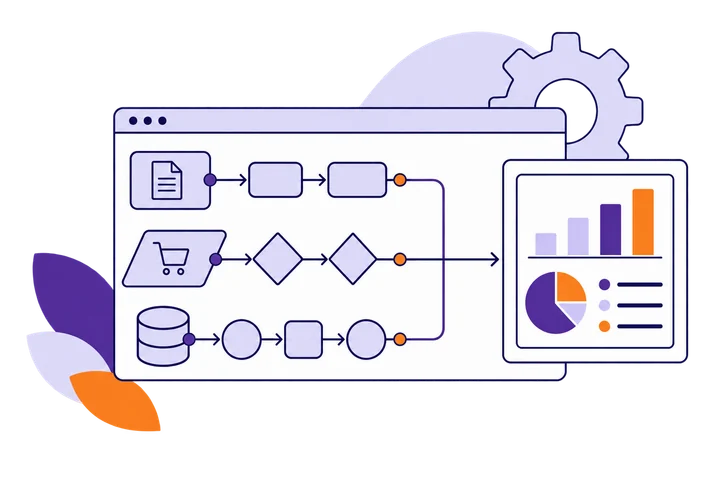
Configurable business workflows feeding shared operational reporting.

A business management system built around how you work

Your business may sell products, deliver services, manage projects or combine several activities. Archer starts with the records, responsibilities and handoffs that matter to your teams, then defines the Odoo applications, configuration and any development needed to connect them.

You do not need to fit a fixed industry package. Analysis establishes the required processes, data, approvals and reporting, including any integration with systems you retain. Scope and acceptance criteria determine what will be delivered.

Business workflow gaps to check with your ERP provider

Compare providers through the work your teams carry out: how a request becomes an order, service or project, how purchasing or stock is involved, and how the financial record is completed. Include exceptions, approvals and reporting in the demonstration.

Fragmented Operational Systems

Many companies rely on multiple independent systems for accounting, operations, customer management, and reporting.

This fragmentation can create duplicated data, inconsistent reporting, and limited operational visibility.

Limited Visibility into Financial and Operational Performance

When financial and operational data exist in separate systems, management teams often struggle to obtain a clear and reliable view of company performance.

Manual Coordination Between Departments

Organizations frequently rely on spreadsheets and manual coordination between departments to manage operational activities.

As the organization grows, these manual processes become increasingly difficult to maintain.

Difficulty Scaling Operations

Without integrated systems, expanding operations or increasing transaction volumes may lead to operational inefficiencies and reporting delays.

ERP systems help organizations address these challenges by integrating financial, operational, and reporting environments within a single platform.

Workflows to define for your business ERP

Choose the areas required by your operating model. The list below describes scope options to assess, configure and validate; it is not a mandatory set of applications.

Finance and Accounting

Agree invoicing, receivables, payables, approvals, balances and financial reports, including required links to operational records.

Purchasing and Suppliers

Define purchase requests, approvals, orders and receipts, and how they relate to your stock, projects, assets or services.

Sales, Services and Projects

Define the customer, order, service or project records your teams need, their responsibilities and the handoffs between functions.

Inventory and Assets Where Required

Where you manage goods or assets, agree stock locations, movements, ownership, access and the records needed to follow their use.

Reporting and Management Visibility

Agree the operational and financial reports management needs, where the data comes from and who maintains it. Validate the reports against representative transactions.

How Archer implements ERP for your operating model

Archer analyses workflows and reporting requirements, configures and tailors Odoo, prepares approved starting data and validates company-policy user access. Business acceptance, training and supported go-live prepare teams to use the agreed scope.

Review our implementation approach and discuss how your existing systems, controls and team responsibilities affect the proposed solution. Sector-specific or regulatory requirements need explicit assessment and validation; they are not assumed to be covered by a generic setup.

Start with the work your business needs to connect

These are operating situations to discuss during analysis, rather than claims of a fixed product for every sector:

Selling goods: customer orders, purchasing, stock movements, delivery and invoicing.
Delivering services: requests, assignments, completed work, expenses and billing.
Managing projects: responsibilities, purchasing, cost records and financial reporting.
Operating across companies or sites: shared records, local responsibilities and access controls.
Managing physical assets: asset records, material use and required operational or financial handoffs.

Agree the processes you need now, what can follow later and any dependencies. Workflows, data and controls determine the scope.

What to agree before your ERP implementation

ERP implementation in organizations outside traditional vertical sectors requires careful operational analysis.

01

Understanding Operational Workflows

Each organization operates with unique operational processes that must be reflected in the ERP system.

02

Aligning System Structure with Business Operations

ERP systems must be configured to support the operational environment of the organization rather than forcing teams to adapt to generic system structures.

03

Integrating Financial and Operational Data

One of the primary objectives of ERP systems is to provide a unified view of financial and operational activities.

Successful implementations therefore require strong integration between operational workflows and financial reporting.

Frequently Asked Questions About ERP Across Industries

Can Archer implement ERP if our sector is not listed separately?

Archer Solutions can assess your operating requirements and propose a tailored Odoo implementation. Start with the workflows, data, controls and reports you need, then agree suitability, scope and acceptance criteria. A sector name alone does not establish that a standard setup will fit.

Is this a ready-made ERP package for every industry?

The service is a tailored Odoo implementation. Configuration, development and integrations depend on the agreed requirements. Specialist or regulatory processes require explicit assessment; no fixed package or universal capability is implied.

Do we have to replace every existing system at once?

Analysis determines what to implement, what to retain and any required handoffs or integrations. Agree dependencies, data ownership and controls before choosing the rollout sequence.

What should we compare when choosing an ERP provider?

Ask for demonstrations based on your workflows and exceptions. Compare configuration and development scope, data work, access controls, business acceptance, training, support and upgrade responsibilities. Review our implementation approach to prepare your requirements discussion.

Discuss Your ERP Project

Looking for an ERP implementation provider for your business? Discuss your workflows, data, controls and reporting with Archer Solutions to define a tailored Odoo scope.

OpenAI measurement preferences

With optional measurement and your additional permission, OpenAI may connect confirmed enquiries and later CRM qualification and sales outcomes to ChatGPT ads. We do not send your name, company, phone, email or project note. Forms work when you decline.

Existing optional measurement permission is also required. This choice does not change your Google preferences.

OpenAI measurement is off.